Special application belts
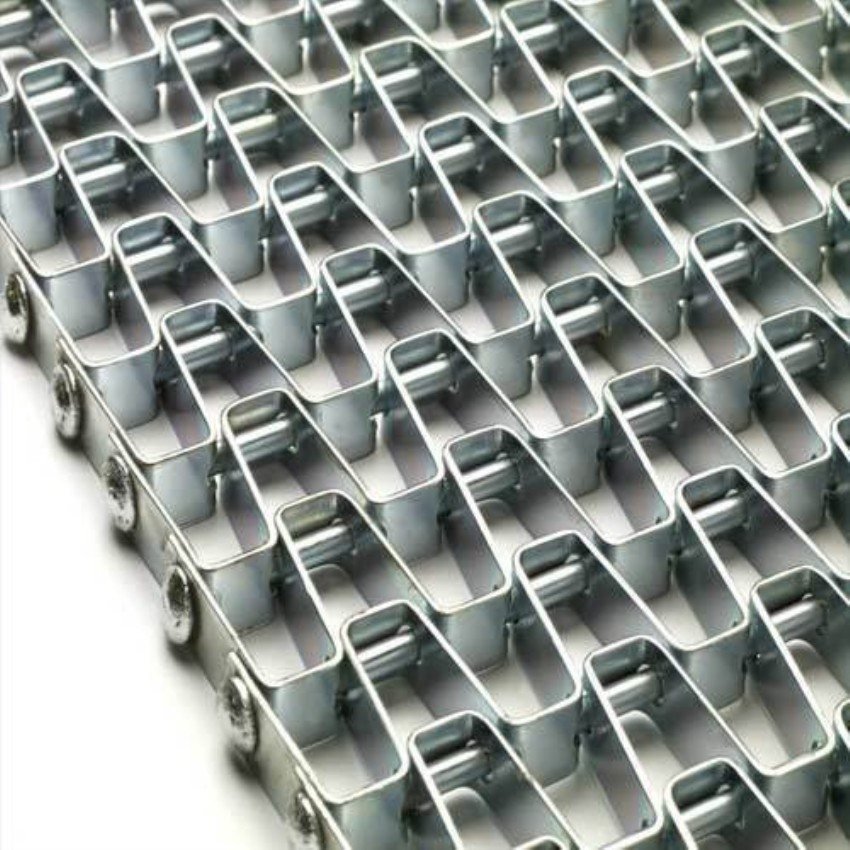
Honeycomb Belt
Built from flat strip and rod for heavier loads than wire belts, with high flexibility.
- Temperature
- Depends on selected alloy
- Used for
- Chocolate enrobing, Oil quenching

Positive-drive modular eye-link belt with a large open area, from −40 °C to 400 °C.

Laminated Belt (R-Omniflex) – made to order by Roshan Industries.
The belt consists of eye links formed from wire, held at a fixed spacing by a cross wire to form a module. Modules are joined by cross rods passing through the eye links, with double bar links along both edges. Rod ends are secured with a hot upset.
The result is a positive-drive belt with no slip, a large open area and a smooth carrying surface — easy to clean and well suited to freezing, washing and baking.
Wire eye-link modules spaced by cross wires, joined with cross rods and double bar links at both edges; rod ends hot-upset.
Width, length, wire diameter, mesh, material and edge finish are made to your requirement. Available edges: Double bar links (standard). See belt edge types.
Values as published by Roshan Industries. Other combinations made to order — confirm final specification with our engineers.
| Characteristic | Value |
|---|---|
| Belt pitch | 30 mm (1.18 in), 50 mm (1.97 in), 50.8 mm (2.0 in), 75 mm (2.95 in) |
| Eye-link wire diameter | 2 mm (0.079 in), 2.5 mm (0.098 in), 3 mm (0.118 in), 3.5 mm (0.138 in) |
| Width limits | 100 mm (3.94 in) to 6000 mm (236.2 in) |
| Variable mesh (minimum) | Wire diameter + 0.5 mm (0.020 in) |
| Conveying surface | Overall belt width − 7 mm (0.276 in) |
| Turn capability | Straight run only |
| Temperature range | −40 °C (−40 °F) to 400 °C (752 °F) |
Industries: Food Processing & Freezing, Biscuit & Bakery
Belt life depends on correct installation and break-in, conveyor alignment and condition, load and load concentration, operating temperature and contaminants. Keep the conveyor aligned, avoid concentrated loads, and inspect edges and joints regularly.
From 100 mm up to 6000 mm.
For freezing environments a low-carbon stainless steel such as T304L or T316L is recommended.
Fill in what you know — fields adjust to this belt type. You can attach a drawing or a photo of your existing belt.
Built from flat strip and rod for heavier loads than wire belts, with high flexibility.
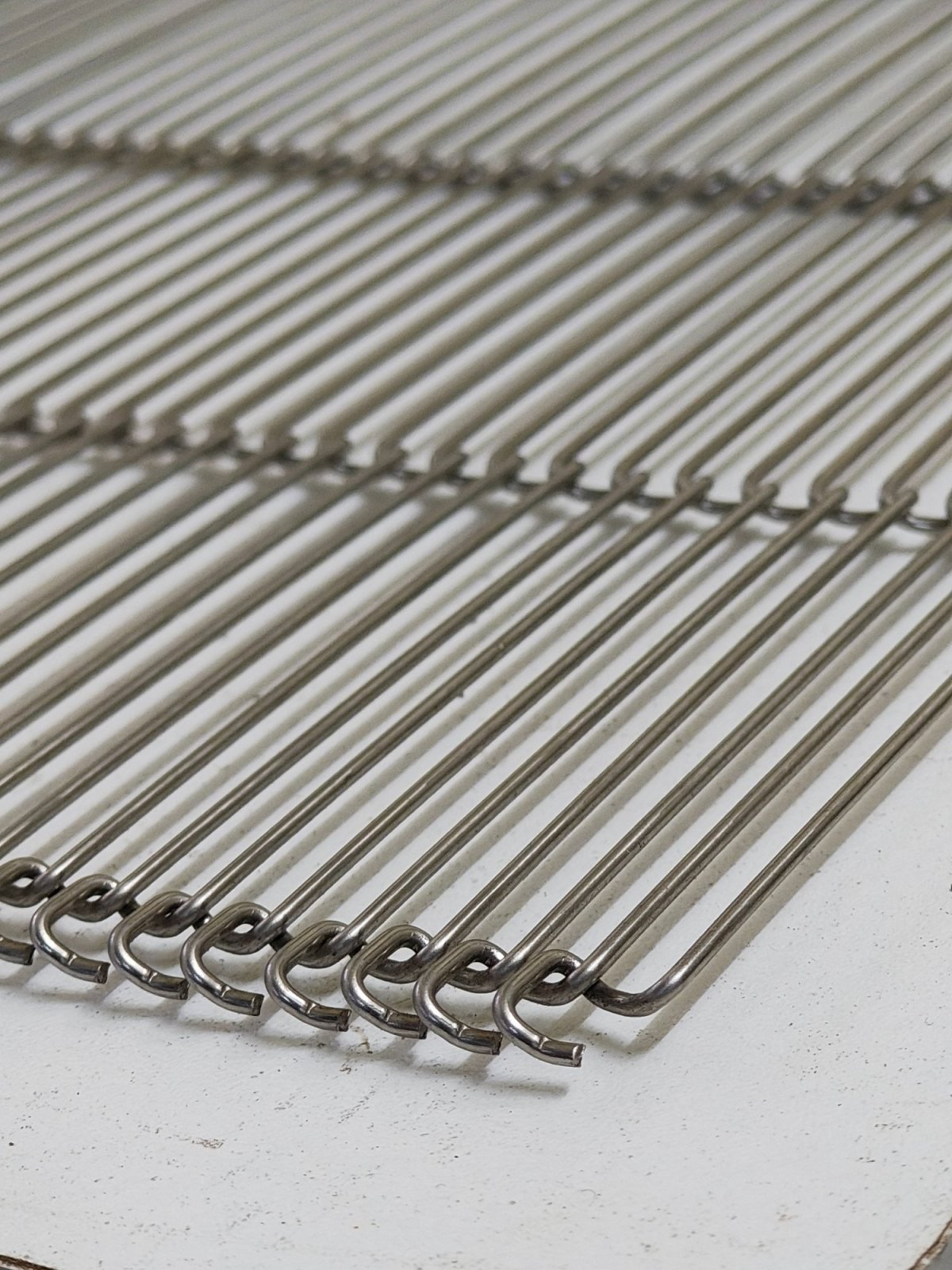
Large-pore wire belt that lets chocolate or oil drain freely during enrobing and quenching.
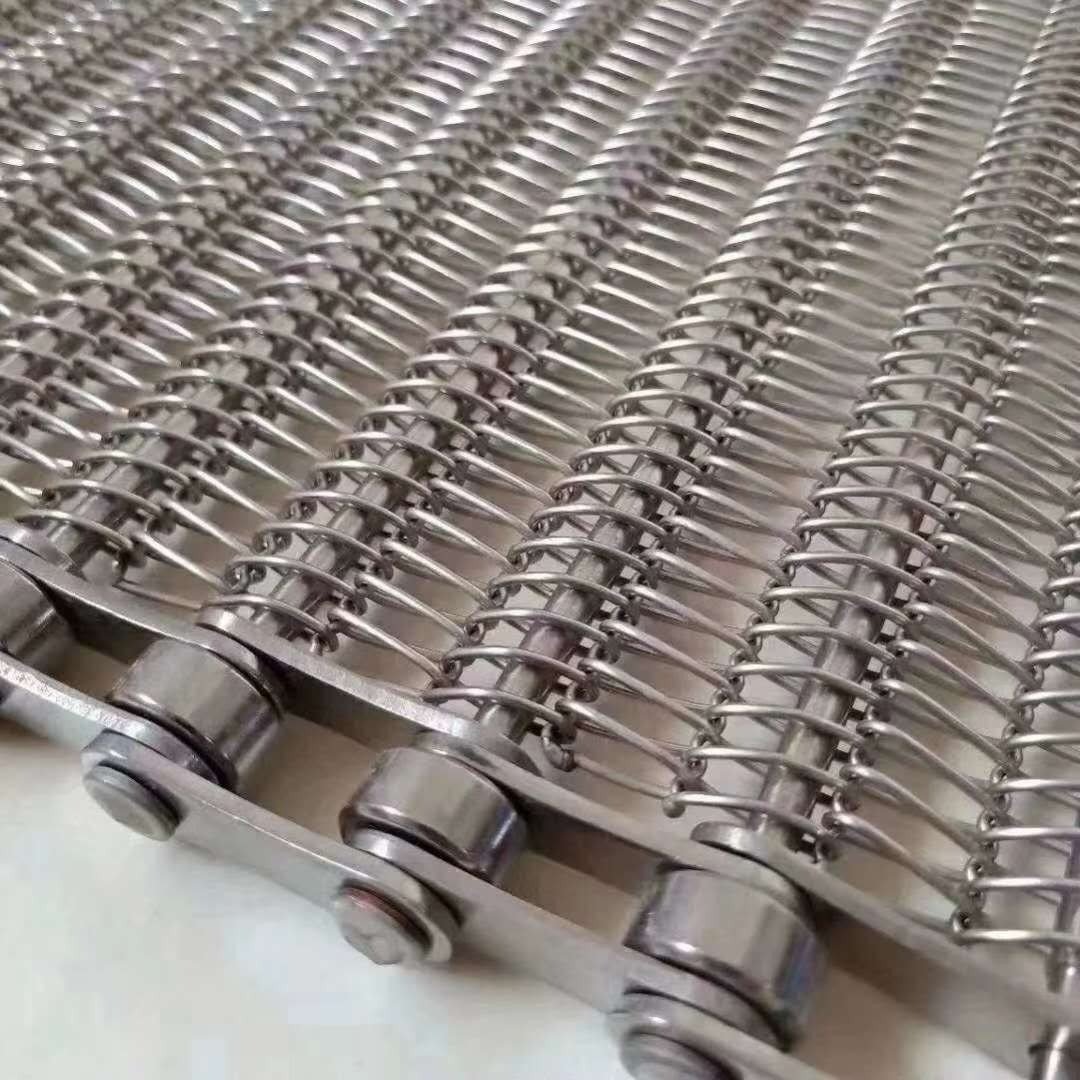
The most widely used process-industry belt: straight-running, high tensile strength and economical.